Podcast: Does Drum Programming Kill Creativity?
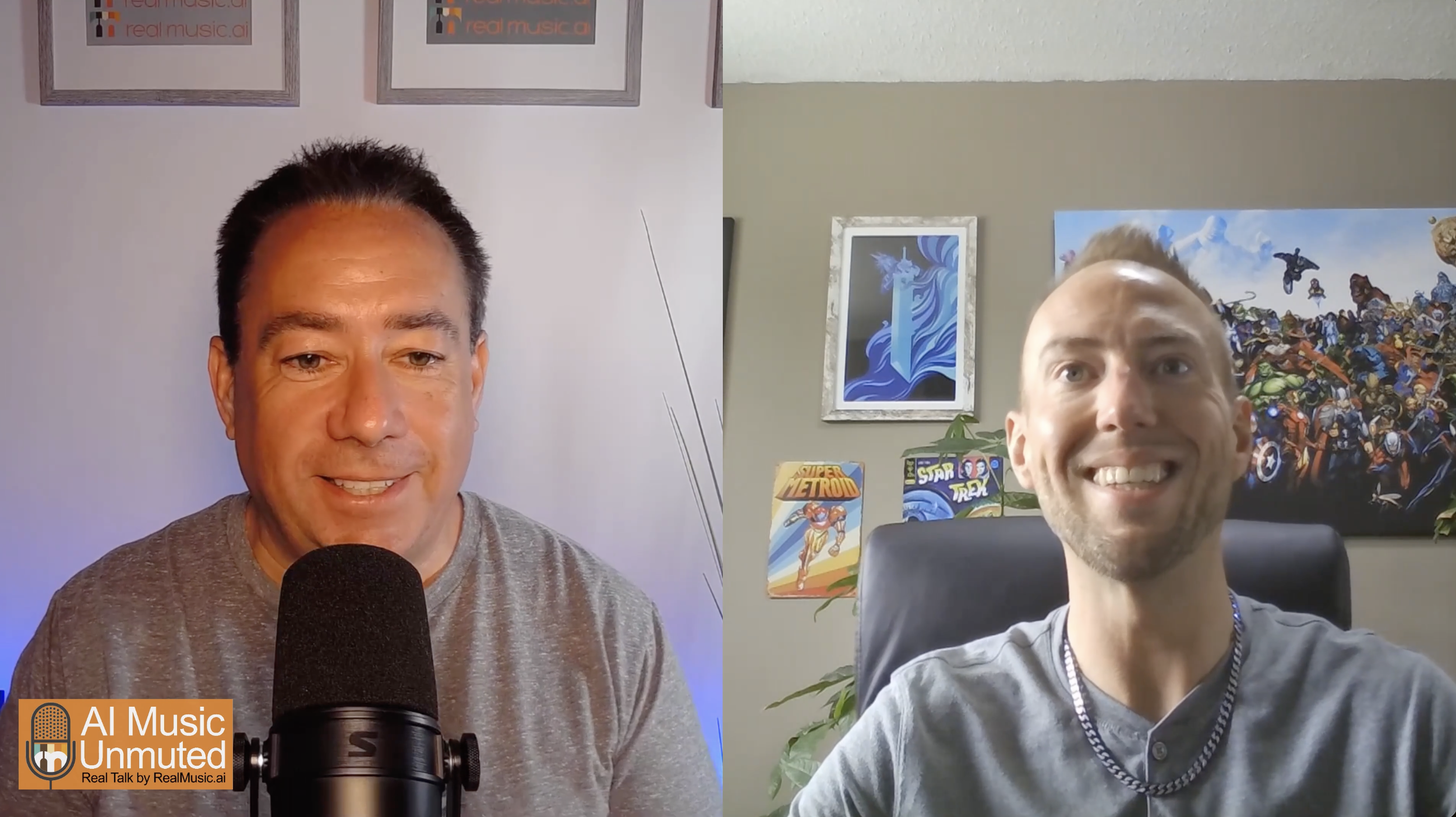
In this this episode of the Real Music podcast, David O’Hara talks with with Jeremy Jost, guitarist, developer, and creator of DrumBot AI. The conversation explores how AI is changing the way musicians approach drums, songwriting, and creative workflow, especially for artists who aren’t natural programmers or drummers.
Jeremy’s perspective comes from a very practical place. As a guitarist writing riffs, he would consistently hit a wall when it came time to build drums around his ideas. Traditional options like loop libraries or manual MIDI programming either slowed him down or pulled him into a more technical mindset that broke his creative flow.
The conversation starts with that friction. Not the lack of ideas, but the gap between having an idea and being able to move forward with it. Jeremy explains that most existing tools required too much searching or too much manual input, which made it harder to stay in the moment when writing.
From there, the discussion shifts to how AI can help. Rather than replacing drummers or generating full songs, tools like DrumBot AI are designed to act as a starting point. A guitarist can record a riff, hum a rhythm, or tap out a pattern, and quickly generate a beat that matches the energy of the idea. From there, the process becomes iterative, refining fills, adjusting structure, and shaping the result inside a DAW.
A key theme throughout the episode is accessibility. Rhythm is something most people already understand. As Jeremy points out, almost anyone can tap out a beat or feel a groove, even if they’ve never played a drum kit. That makes drums a natural place for this type of AI-assisted workflow to evolve.
At the same time, the conversation makes it clear that AI is not replacing musical judgment. Jeremy notes that AI still struggles with feel and often needs to be nudged or corrected. In fact, one of the more direct points in the discussion is that if you’re not finding yourself adjusting or correcting AI output, you’re probably not bringing much musical perspective into the process .
This reinforces a broader idea. AI can generate options, but it doesn’t decide what works. That responsibility still sits with the musician.
The episode also touches on the ongoing tension around friction in the creative process. Some argue that removing struggle removes creativity. Others see AI as a way to remove unnecessary roadblocks and capture ideas more quickly. Jeremy leans toward the latter, describing AI as a creativity multiplier that helps artists move past technical barriers without replacing the creative work itself.
That distinction becomes important when looking at where AI fits in today’s music landscape. Rather than focusing on full song generation, tools like DrumBot AI sit inside the workflow. They help musicians get from idea to starting point faster, but still rely on human input to shape the final result.
Ultimately, the conversation highlights a simple shift. AI is not replacing musicians. It is changing where the work happens.
Instead of spending time building everything from scratch, more of the process moves toward refining, shaping, and making decisions. The tools can get you started, but they don’t finish the job.
What you’ll learn in this episode:
• How AI is being used to generate drum ideas from riffs, vocals, and simple inputs
• Why traditional drum workflows can break creative momentum
• The role of iteration and refinement when working with AI-generated patterns
• Why musical feel still requires human input
• How AI shifts the creative process without replacing it
• Where tools like DrumBot AI fit in real-world music production workflows
Watch or listen to the full episode.
Video Episode: YouTube and Spotify
Audio Episode: Apple Podcast, Podbean, Amazon Music/Audible, iHeart Radio, Player FM, Spotify, Listen Notes, Podchaser, Boomplay