Podcast: AI Recreated His Lost Performance… Steve Morse Reacts
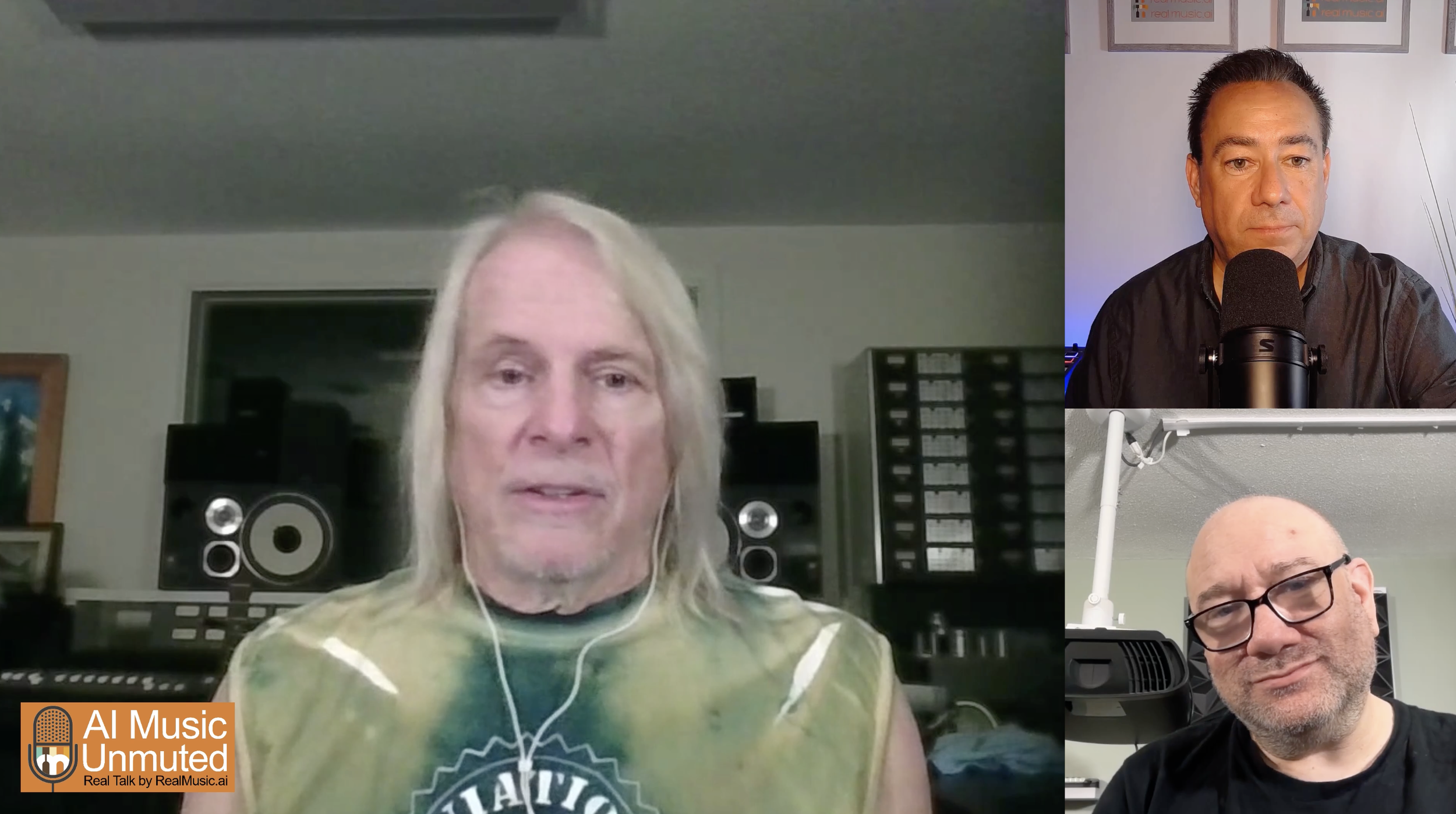
For this episode of the Real Music podcast, David O’Hara talks with with Dr. Bill Evans, engineer, researcher, and creator of Prism, with a special appearance from legendary guitarist Steve Morse. The conversation explores a different side of AI in music, not generation, but performance, restoration, and what it means to sound like yourself.
Bill’s work with Prism focuses on something most AI conversations ignore. Instead of creating music, it enhances human performance. That distinction becomes clear early in the discussion, especially through Steve Morse’s experience using the technology to repair a live recording that had serious technical issues .
The starting point of the conversation is simple. AI is often framed as a tool for generating music, but in practice, some of the most meaningful applications are about fixing problems that would otherwise be impossible to solve. In this case, Prism was used to reconstruct parts of a live performance, including sections that were missing or unusable, while still preserving the feel and intent of the original playing.
That leads to a broader question. What does it mean to “fix” a performance without changing it?
Steve describes it as walking a fine line. There is a difference between improving clarity and rewriting reality. Removing noise, correcting technical issues, or restoring missing elements can make a recording more accurate to what actually happened. But pushing too far risks turning something real into something artificial.
That tension shows up throughout the conversation.
A key moment comes when Bill explains an experiment he ran during a live collaboration session. He trained AI models to generate music in the style of the musicians in the room and compared those outputs to what the musicians actually played in real time. Technically, the AI could produce something that sounded similar. But it lacked context.
The difference wasn’t in the notes. It was in the interaction.
Human musicians were reacting to each other in real time, adjusting based on feel, energy, and subtle cues in the room. The AI, on the other hand, was reacting to data. It could follow patterns, but it couldn’t understand why something should happen in that moment.
That gap is where the human element becomes obvious.
The conversation also touches on a broader concern around authorship and identity. As AI tools become more capable, the question shifts from “can it do this?” to “who is actually creating the result?” Bill frames Prism as a way to move in the opposite direction, giving musicians tools to express themselves more clearly rather than replacing that expression.
That idea shows up in a simple but important concept:
AI can enhance performance
AI can repair technical problems
AI can generate ideas
But AI cannot originate personal intent
That last point is what ties the episode together.
Steve offers a useful analogy, comparing AI to nuclear fission. It can be incredibly powerful when controlled and applied correctly, but it also carries risks if used without intention. In music, that risk is less about destruction and more about dilution. If everything becomes easy to create, it becomes harder to understand what is real, what is authored, and what actually matters.
The episode doesn’t argue against AI. It reframes how it should be used.
Instead of focusing on replacing musicians, tools like Prism are designed to make musicians more competitive, more expressive, and more capable of delivering what they intended to create in the first place. That’s a very different direction than full generative systems.
Ultimately, the conversation comes back to something simple. AI can help you sound better. It can even help you sound more like yourself.
But it still needs someone to be that person.
What you’ll learn in this episode:
• How AI is being used to repair and enhance real performances
• The difference between improving a recording and changing it
• Why AI struggles with context in live collaboration
• How performance-level AI differs from generative music tools
• The role of authorship and identity in AI-assisted music
• Why human intent remains central, even as tools improve
Watch or listen to the full episode.
Video Episode: YouTube and Spotify
Audio Episode: Apple Podcast, Podbean, Amazon Music/Audible, iHeart Radio, Player FM, Spotify, Listen Notes, Podchaser, Boomplay