For this episode of the Real Music podcast, David O’Hara sits down with Dr. Bill Evans, engineer, researcher, musician, and one of the earliest people using AI at the performance level rather than the prompt level. The conversation explores a side of AI in music that still gets overlooked: not generating songs from scratch, but helping preserve, restore, and reveal the performance that was already there.
That distinction matters. A lot of the public conversation around AI music still centers on full generation. Bill’s work points somewhere else. His focus is on damaged, incomplete, or limited recordings and using AI to recover the musical intent inside them. The goal is not to replace the artist. It is to get closer to what the artist actually meant to play.
Bill describes performance as the space between the notes on the page and the feeling a listener has when those notes become sound. He is not just restoring audio. He is trying to restore the expressive detail that recording technology can sometimes hide, damage, or fail to capture.
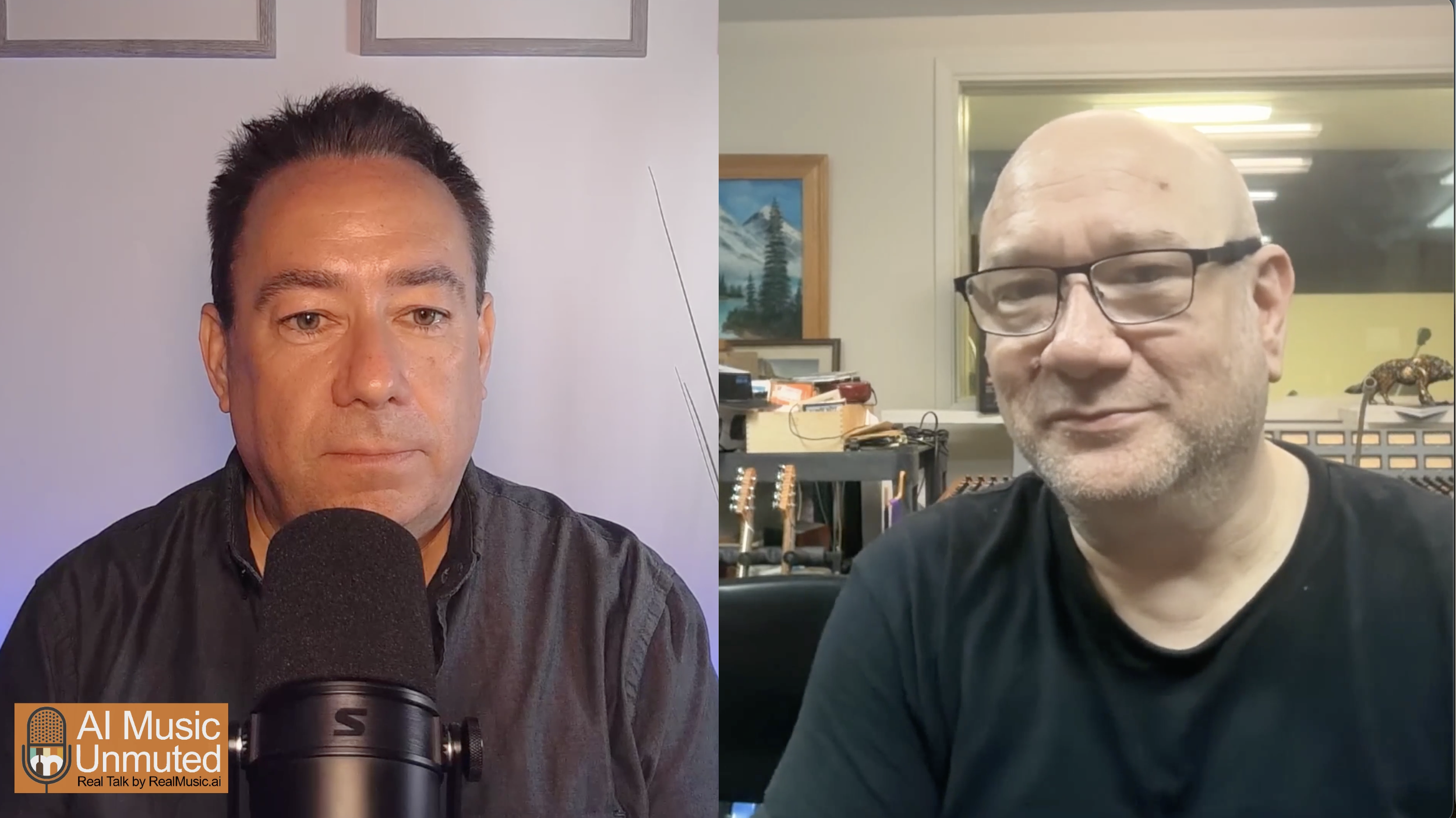
That approach has shaped his career for years. Long before most people were talking about AI music, Bill was already building systems to solve performance-level problems that traditional production tools could not.
Some of his accomplishments include:
Engineering Live at the Z7 in 2015, introducing a new audio technology that increased the cognitive perception of musical performances
Developing and engineering the AI on the No. 1 charting all-star guitar album Mutual Admiration Society in 2017 to recreate the feel of artists playing together in the same room
Remixing a Grammy-winning Album of the Year for SONY in 2018 from only the two-track master, working with Jay Graydon
Developing the first lossless isolation of a drum performance in 2018, with Marco Minnemann on drums
Creating the first audio-to-MIDI-to-audio system for poly-instrumental music in 2019
Helping reimagine and relaunch what became Steinberg’s SpectraLayers, now included with Cubase and Pro Tools
Developing the first Cognitive Displacement AI tool for an Alice Cooper album in 2022
Being selected in 2023 over Peter Jackson’s team to recreate a legendary musical performance that was never recorded for a Hollywood film still in development
The Flying Colors story is probably the clearest example of how Bill works. He describes receiving a damaged live recording that could not be repaired through normal methods. There were dropouts, noise, and even seven missing seconds in the middle of a Steve Morse solo. Because the band had a strict no-overdubs rule for live albums, he had to think differently. Instead of trying to restore the audio directly, he focused on reconstructing the performance itself. Steve later said he could not tell which seven seconds had been missing.
The episode becomes even more interesting when the conversation moves into collaboration. Bill talks about building AI systems that could generate music in the style of real performers and then comparing those results to what happened when musicians in the room reacted to each other live. The AI could produce something plausible. What it could not do was understand context. It could not read body language, feel the room, or respond to the emotional energy of the moment.
That is where the human difference becomes obvious.
AI can help recreate what a musician likely meant to do. It can help preserve a performance. It can even help make someone sound more like themselves. But it still does not replace the empathy, interaction, and immediacy that happen between real musicians in real time.
That is also why this conversation matters beyond the technical side. It shows a more useful way to think about AI in music. Not as a replacement for creativity, but as a tool that can make musicians more expressive, more competitive, and more capable of preserving the thing that matters most: their own intent.
What you’ll learn in this episode:
What performance-level AI actually means in music production
How AI can restore damaged recordings without replacing the artist
Why Bill Evans focuses on performance rather than pure audio repair
How seven missing seconds of a Steve Morse solo were reconstructed
Why AI still struggles with context in live musical collaboration
How performance restoration differs from full generative AI
Why human intent remains the most important part of the process
Watch or listen to the full episode.
Video Episode: YouTube and Spotify
Audio Episode: Apple Podcast, Podbean, Amazon Music/Audible, iHeart Radio, Player FM, Spotify, Listen Notes, Podchaser, Boomplay