Much of the public discussion around AI and music focuses on disruption, replacement, and copyright debates. Inside the industry, however, a more nuanced reality is taking shape. Many of the people building AI music tools today are musicians themselves. That perspective matters.
In a recent conversation on the RealMusic.ai podcast, Rory Kenny of Loudly reflected on his path from touring musician to music technology entrepreneur and how that background shapes the way AI tools are developed for creators.
Rather than framing AI as a substitute for musicianship, the discussion explored how emerging tools can expand creative possibilities while still relying on human judgment, taste, and artistic direction.
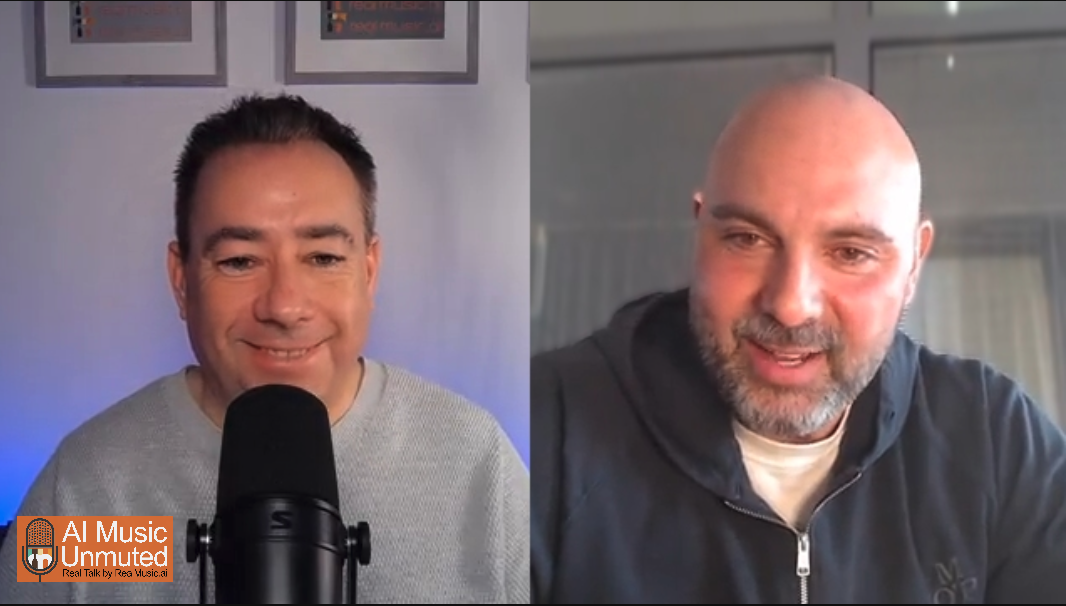
What We Discuss
• Why many AI music platforms are being built by musicians
• How AI is expanding the creative surface area for artists
• The growing importance of taste and curation in AI-assisted workflows
• How remixing and experimentation are evolving in the AI era
• Why authenticity and live performance may become even more valuable
Musicians Building AI Tools
One of the more overlooked dynamics in the AI music landscape is that a significant number of founders, developers, and product designers come from musical backgrounds.
They understand the realities of songwriting, recording, and production workflows. They also understand the emotional investment artists place in their work. As a result, many of the most interesting AI tools are being built not to automate creativity, but to support it.
In this sense, the current generation of AI music platforms reflects a familiar pattern in music technology. Historically, some of the most influential tools have emerged from people who were deeply embedded in the creative process themselves.
Expanding the Creative Surface Area
AI does more than accelerate production. It expands the range of experimentation available to artists.
Musicians can explore variations of an idea quickly, test arrangements, reinterpret sounds, and move through early-stage creative exploration at a pace that was previously difficult. This does not remove artistic judgment from the process. If anything, it increases the importance of it.
When tools can generate more options, the role of taste becomes more central.
Artists spend less time overcoming technical barriers and more time shaping and refining ideas that resonate.
The Rise of Curatorial Creativity
This shift introduces an interesting evolution in how creativity functions.
Traditional production often emphasized technical skill and instrument mastery as the primary gatekeepers of music creation. AI tools are expanding participation by lowering some of those barriers.
At the same time, they elevate another skill: curation.
Creators increasingly act as editors within an expanded creative field. They guide the process, evaluate outcomes, and determine which ideas deserve further development.
The human role moves further upstream in the creative process.
Authenticity in an AI Era
Ironically, the rise of AI-generated content may strengthen the value of authenticity.
As digital content becomes easier to produce, audiences often gravitate toward experiences that feel more human and tangible. Live performance, musicianship, and artistic identity may become even stronger signals of authenticity.
This pattern has appeared before in music. Each technological shift initially raises concerns about replacing artists, yet over time those changes often reinforce the importance of human creativity.
AI may follow a similar trajectory.
The Next Phase of AI Music
The AI music landscape is still evolving quickly, and no single model of creation has fully emerged. What is becoming clear, however, is that the most compelling uses of AI tend to treat it as a creative collaborator rather than a replacement for musicians.
For artists, the opportunity lies in understanding these tools early and integrating them thoughtfully into their workflow.
The technology will continue to evolve, but one principle remains constant: music ultimately succeeds based on how it connects with listeners.
And that connection is still deeply human.
Watch or listen to the full episode.
Video Episode: YouTube and Spotify
Audio Episode: Apple Podcast, Podbean, Amazon Music/Audible, iHeart Radio, Player FM, Spotify, Listen Notes, Podchaser, Boomplay